
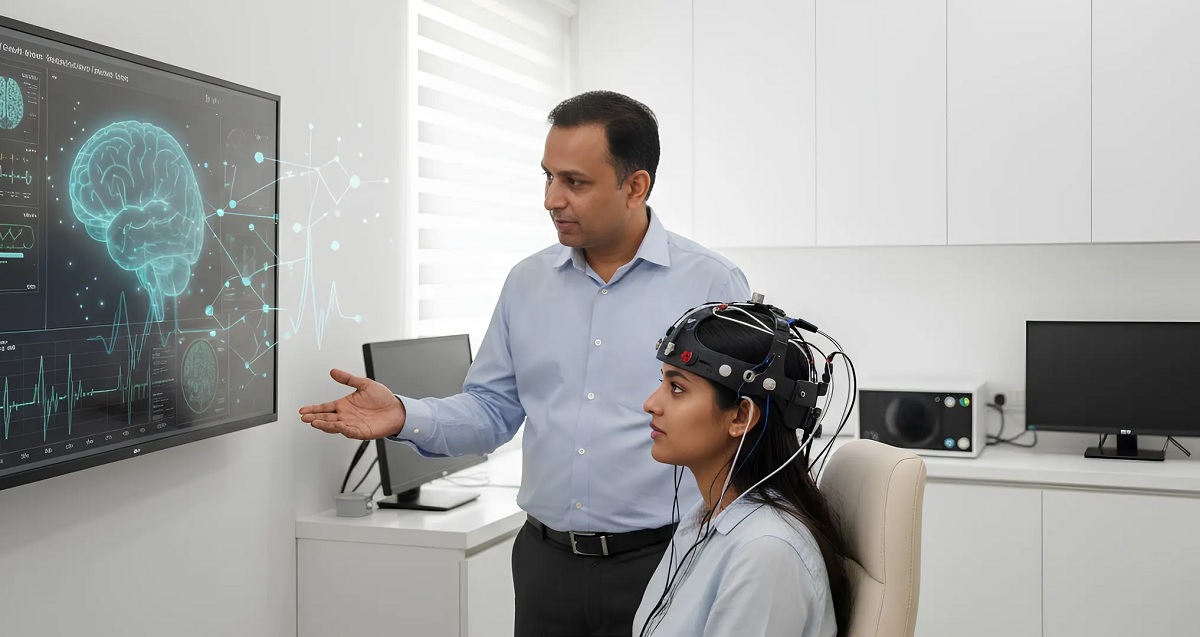
Interest in neurotherapy is growing across Australia as more people look for ways to manage attention, worry and daily pressure. If you have looked for a Sydney neurotherapy clinic, you have probably come across terms like neurofeedback, brain mapping and qEEG. This guide explains what these approaches involve, what the research shows and how they may fit alongside other forms of care.
Neurotherapy is a broad term for methods that aim to influence brain activity. The most common form is neurofeedback, a type of biofeedback. Sensors placed on the scalp record electrical activity in the brain. A computer then displays this activity as sound, images or a simple game. When brainwave patterns shift towards a target range, you receive a reward signal. Over repeated sessions, the brain may learn to produce those patterns more often.
Many practitioners at Sydney neurotherapy clinics begin with a quantitative EEG (qEEG) assessment. This maps brainwave activity and helps guide the training plan. Sessions usually run for 30 to 60 minutes, and a typical program involves 20 to 40 sessions. The process is non-invasive and does not involve medication.
Neurotherapy and ADHD
ADHD affects around one in 20 Australian children, and many adults also live with the condition. Some people with ADHD show different patterns of slow and fast brainwave activity, particularly in areas linked to focus and impulse control. Neurofeedback for ADHD often targets these patterns.
Some studies report improvements in attention and hyperactivity. Others find smaller effects when trials use stricter controls. Current evidence suggests neurofeedback may help some people, but it should not replace established treatments such as medication, behavioural strategies and educational support.
Neurotherapy and Anxiety
Anxiety is one of the most common mental health conditions in Australia, affecting about one in six adults each year. Neurofeedback for anxiety usually aims to increase calm, alert brain states and reduce patterns linked to overarousal. Early research shows promising results, though larger, well-designed trials are still needed. Many practitioners use neurofeedback together with talking therapies like cognitive behavioural therapy.
Neurotherapy and Stress
Ongoing stress can affect sleep, mood and concentration. Some people use neurofeedback to train relaxation responses and improve emotional regulation. Combined with exercise, good sleep habits and social support, it may form one part of a wider stress management plan.
Practical Points for Australians
Before starting neurotherapy, keep these points in mind:
- Speak to your GP first. Your doctor can rule out other causes and discuss proven treatment options.
- Check qualifications. Look for practitioners with recognised health qualifications, such as registered psychologists, and specific training in neurofeedback.
- Understand the costs. Medicare does not generally cover neurofeedback. Some private health funds offer limited rebates when a registered psychologist delivers the service, so check your policy.
- Ask about evidence. A trustworthy practitioner will explain the research honestly and set realistic expectations.
- Track your progress. Agree on clear goals and review results at regular intervals.
The Bottom Line
Neurotherapy offers a drug-free, non-invasive option that may support people living with ADHD, anxiety and stress. The research is encouraging in some areas and still developing in others. Treat it as a possible complement to proven care, not a standalone fix. Talk with a qualified health professional to decide if it suits your needs.